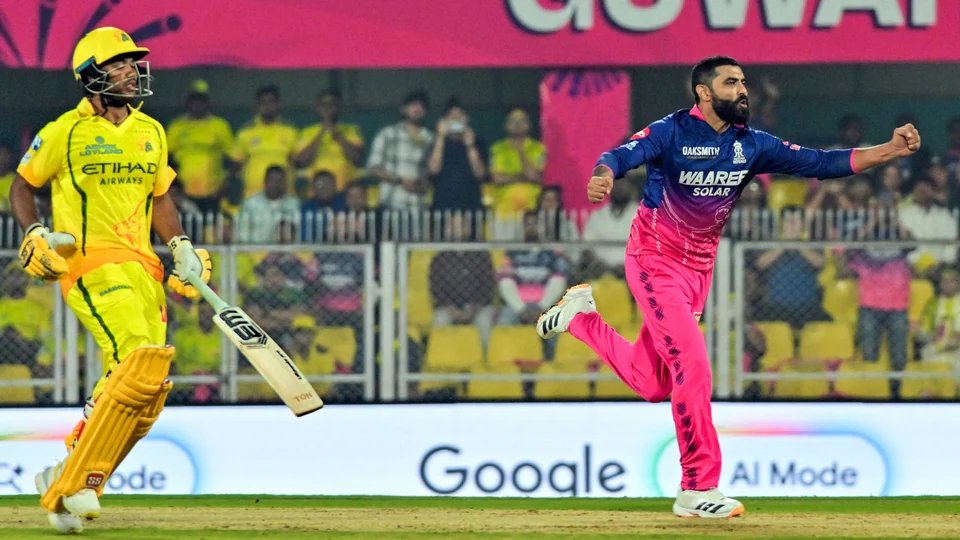







Virat Kohli’s 50 vs MI: Anchor’s Value or Strike-Rate Concern!

T20 cricket has undergone a dramatic transformation over the past decade. What was once a format where 150 was competitive is now a stage where 200+ totals are frequently chased down. Batting approaches have shifted accordingly—power-hitting, fearless stroke play, and high strike rates dominate the narrative.
Yet, amidst this aggressive revolution stands a player like Virat Kohli, whose game has traditionally been built on timing, placement, and calculated acceleration. His half-century against Mumbai Indians reignited the debate: does a measured innings still hold value, or does it slow the team down in a format that rewards relentless aggression?
To answer this, we must examine the innings through multiple lenses—match context, team composition, pitch conditions, and the broader evolution of T20 batting.
The Role of the Anchor: A Traditional Necessity
Historically, every successful T20 side featured an “anchor”—a batter who ensured stability while others played aggressively around him. Kohli has been the archetype of this role.
An anchor typically:
- Preserves wickets during the powerplay or early collapse
- Builds partnerships
- Accelerates in the latter stages
- Provides a base for finishers
Kohli’s IPL success is deeply rooted in this role. His record-breaking 973-run season in 2016 exemplified how an anchor could dominate even in a high-scoring environment.
Against Mumbai Indians, his 50 followed a familiar pattern:
- Controlled start
- Minimal risk in early overs
- Gradual increase in scoring rate
- Focus on gaps rather than brute force
This approach, while classical, is now constantly scrutinized in a format where players like Suryakumar Yadav and Jos Buttler redefine scoring possibilities.
Strike Rate vs Stability: The Core Debate
At the heart of the criticism lies one metric: strike rate.
In modern IPL analysis:
- A strike rate below 130 is often seen as slow
- 140–150 is considered acceptable
- 160+ is ideal for top-order batters
If Kohli’s 50 came at, say, a strike rate around 130–140, critics argue that it leaves runs “on the table.” The argument goes:
A 50 off 40 balls (SR 125) might look solid, but a 50 off 30 balls (SR 166) can be match-defining.
However, this argument ignores context.
Context Matters: Reading the Match Situation
An innings cannot be judged in isolation. Several contextual factors determine whether Kohli’s approach was justified:
1. Early Wickets
If wickets fell early, an anchor becomes indispensable. A collapse at the top demands consolidation, not reckless aggression.
2. Pitch Conditions
Not all IPL pitches are batting paradises. Slower surfaces or two-paced wickets reward timing and placement over power.
3. Opposition Bowling Attack
Mumbai Indians have historically fielded strong bowling line-ups. Facing quality bowlers requires calculated risk rather than blind hitting.
4. Batting Support
If other batters struggle, the anchor’s role becomes even more critical. Conversely, if others are scoring freely, a slow anchor becomes more questionable.
Thus, Kohli’s 50 must be evaluated within these match-specific dynamics.
The Evolution of T20 Batting
The criticism of Kohli reflects a broader shift in T20 philosophy.
Modern batting trends include:
- Attacking from ball one
- Increased use of unconventional shots
- Higher boundary percentages
- Reduced dot-ball tolerance
Players like Suryakumar Yadav exemplify this shift, scoring at extraordinary strike rates without requiring a “settling” period.
This evolution raises an important question:
Is the anchor role becoming obsolete?
The Case FOR Kohli’s Approach
1. Risk Management
High strike rates often come with higher risk. Anchors minimize collapses, which can be more damaging than a slightly lower scoring rate.
2. Chasing Mastery
Kohli is widely regarded as one of the greatest chasers in cricket history. His method thrives in run chases, where pacing an innings is crucial.
3. Partnership Building
Anchors allow aggressive players to play freely. Without stability, teams risk losing wickets in clusters.
4. Consistency
While explosive players can be inconsistent, anchors provide reliability across a long tournament like the IPL.
5. Pressure Absorption
In high-pressure situations, anchors absorb pressure, allowing others to capitalize later.
The Case AGAINST Kohli’s Approach
1. Dot Ball Pressure
A slower innings can increase dot-ball pressure on the team, forcing others to take excessive risks.
2. Opportunity Cost
Every ball faced at a lower strike rate is a missed opportunity for higher scoring.
3. Changing Benchmarks
The IPL’s scoring standards have evolved. What was once acceptable is now below par.
4. Powerplay Utilization
Modern teams maximize the powerplay. A cautious approach in these overs can be seen as underutilization.
5. Middle-Overs Slowdown
Anchors can sometimes stall during middle overs, making it difficult to accelerate later.
Statistical Perspective
Let’s consider a simplified comparison:
- Scenario A: 50 off 40 balls → 125 strike rate
- Scenario B: 50 off 30 balls → 166 strike rate
The difference:
- 10 extra balls consumed
- Potentially 15–20 runs lost
In a format where matches are often decided by small margins, this difference is significant.
However, statistics don’t capture:
- Wickets preserved
- Pressure managed
- Match context
Kohli’s Adaptation Over Time
It’s important to note that Kohli has evolved his T20 game.
In recent seasons, he has:
- Increased intent in the powerplay
- Improved boundary frequency
- Reduced dot-ball percentage
Yet, he hasn’t completely abandoned his anchor instincts. Instead, he operates as a hybrid—balancing stability with aggression.
Team Strategy and Role Clarity
A batter’s role is defined by team strategy.
If Kohli’s role is to anchor:
- His innings should be judged on stability and finishing ability
If his role is to attack:
- Strike rate becomes a primary metric
The real issue arises when expectations and roles are misaligned.
Teams like Mumbai Indians often rely on aggressive starts, with players like Suryakumar Yadav maintaining high tempo. In contrast, teams built around Kohli may prioritize structure and consistency.
The Psychological Dimension
Cricket is as much mental as it is technical.
An anchor:
- Provides reassurance to teammates
- Reduces panic during collapses
- Maintains dressing-room confidence
Kohli’s presence at the crease often has intangible benefits that statistics cannot quantify.
Fan Expectations and Narrative Bias
Modern fans expect entertainment—boundaries, sixes, and high strike rates.
This creates a bias:
- Slow innings are seen as boring
- Aggressive innings are celebrated
Kohli’s style, rooted in classical batting, sometimes clashes with these expectations.
The Ideal Balance
The future of T20 batting likely lies in balance:
- Anchors who can accelerate quickly
- Aggressors who can adapt when needed
- Flexible roles based on match situations
Kohli’s challenge—and strength—is finding this balance.
Conclusion: Anchor or Liability?
So, was Kohli’s 50 against Mumbai Indians valuable or a concern?
The answer is nuanced.
- If the innings stabilized a shaky start and enabled a competitive total, it was valuable.
- If it slowed momentum on a good batting pitch with wickets in hand, it raises valid concerns.
Ultimately, the debate reflects the evolving nature of T20 cricket rather than a flaw in Kohli’s game.
Virat Kohli remains one of the greatest batters of his generation—not because he conforms to trends, but because he adapts while staying true to his strengths. Whether as an anchor or aggressor, his value lies in understanding the game’s demands better than most.
And perhaps that’s the real takeaway: in a format obsessed with speed, there is still room for control—provided it serves the team’s cause.