






Thalapathy Vijay: From Cinema Icon to Emerging Political Force in Tamil Nadu!

Thalapathy Vijay is one of the most influential personalities in Tamil Nadu, known not only for his remarkable contribution to Indian cinema but also for his growing political presence. Over the years, Vijay has evolved from being a celebrated film actor into a public figure whose opinions, actions, and future political ambitions are closely watched by millions of fans and political observers. His journey reflects a rare combination of cinematic stardom, social influence, and a gradual transition toward public service.
Early Life and Background
Joseph Vijay Chandrasekhar, popularly known as Vijay, was born on June 22, 1974, in Chennai, Tamil Nadu. He is the son of renowned film director S. A. Chandrasekhar and playback singer Shoba Chandrasekhar. Growing up in a film-oriented environment, Vijay was naturally drawn toward the world of cinema.
Despite his privileged exposure to the film industry, Vijay’s early life was not without struggles. He faced criticism for being a “star kid” and had to work harder to establish his identity. His education was completed at Balalok Matriculation Higher Secondary School and later at Loyola College, Chennai, although he discontinued his degree to pursue acting full-time.
Entry into Cinema
Vijay made his acting debut as a child artist in the film Vetri (1984), directed by his father. However, his official lead actor debut came in 1992 with Naalaiya Theerpu. The film did not achieve commercial success, but it marked the beginning of his journey as a lead actor.
During the early stages of his career, Vijay faced several failures and criticisms. However, his perseverance and dedication helped him refine his acting skills and choose stronger scripts. Films like Poove Unakkaga (1996) marked his breakthrough, establishing him as a rising star in Tamil cinema.
Rise to Stardom
The late 1990s and early 2000s marked Vijay’s rise as a mass entertainer. He became known for his romantic roles, action sequences, and unique style of dialogue delivery. Movies such as Kadhalukku Mariyadhai, Thulladha Manamum Thullum, Ghilli, and Thirumalai turned him into a household name.
His collaboration with directors like Dharani, Siddique, and S. Shankar further strengthened his position in the industry. The film Ghilli (2004) remains one of the most iconic Tamil action films and significantly boosted his mass appeal.
By the mid-2000s, Vijay had successfully transitioned into a “mass hero” with a strong fan base across Tamil Nadu, Kerala, and overseas Tamil communities.
Evolution into a Versatile Actor
As his career progressed, Vijay began experimenting with more diverse roles. Films like Kavalan, Thuppakki, Kaththi, Mersal, Sarkar, Master, and Leo showcased his versatility.
In Thuppakki, he played an army officer dealing with terrorism, a role that highlighted his ability to handle intense and socially relevant subjects. Kaththi focused on farmers’ issues and corporate exploitation, reflecting Vijay’s growing inclination toward socially conscious cinema.
In Mersal, he addressed issues in the healthcare system, and in Sarkar, he touched upon political awareness and voting rights. These films contributed to the perception that Vijay was not just an entertainer but also someone who subtly engaged with social and political themes.
Fan Base and Mass Influence
One of Vijay’s most powerful assets is his massive fan following. His fans, often referred to as “Thalapathy fans,” treat him almost like a cultural icon. Fan clubs across Tamil Nadu actively engage in social welfare activities such as blood donation camps, food distribution, education support, and disaster relief.
This organized fan base has often been compared to a political support structure, which naturally fuels speculation about his entry into politics. Vijay’s popularity is not limited to cinema audiences; it extends into youth, working-class communities, and rural regions.
Transition Toward Politics
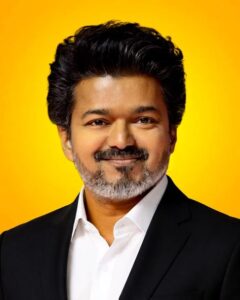
In recent years, Vijay’s political inclinations have become more visible. In 2024, he officially announced the formation of his political party, Tamilaga Vettri Kazhagam (TVK), marking a significant shift in his public journey. This move confirmed long-standing speculation about his political ambitions.
Vijay’s political entry is seen as a response to the demand from fans and the public who view him as a leader capable of bringing change. His speeches emphasize youth empowerment, corruption-free governance, social justice, and transparency.
Unlike many film personalities who entered politics abruptly, Vijay’s approach has been gradual and strategic, maintaining a balance between cinema commitments and political groundwork.
Political Ideology and Vision
Although still evolving, Vijay’s political ideology appears to focus on development-oriented governance. His speeches highlight issues such as education reform, employment opportunities, and equal access to resources.
He often emphasizes the importance of youth participation in politics, suggesting that the younger generation should take active responsibility in shaping the future of the state.
His vision also includes creating a corruption-free administrative system and ensuring that government benefits reach all sections of society without discrimination.
Comparison with Other Actor-Politicians
Tamil Nadu has a rich history of actors entering politics, including M. G. Ramachandran (MGR), Jayalalithaa, and more recently Kamal Haasan. Vijay is often compared to these figures due to his strong screen presence and mass appeal.
However, each leader has had a unique political journey. While MGR and Jayalalithaa successfully became Chief Ministers, Kamal Haasan is still building his political base. Vijay’s entry adds a new dimension to this tradition, with a younger demographic and modern communication strategies playing a key role.
Challenges Ahead
Despite his popularity, Vijay faces several challenges in politics. Transitioning from cinema to governance requires administrative experience, policy understanding, and organizational strength.
Building a strong party structure, fielding capable candidates, and competing against established political parties in Tamil Nadu will be significant hurdles. Additionally, managing public expectations while maintaining credibility will be crucial.
Another challenge is balancing his film career with political responsibilities during the transition phase.
Public Perception and Media Attention
Media coverage of Vijay’s political entry has been intense. Every speech, appearance, and statement is closely analyzed. While his supporters see him as a potential reformer, critics question his experience in governance.
Nevertheless, his clean public image, disciplined lifestyle, and strong connection with youth give him an advantage in shaping public perception.
Future Prospects
The future of Vijay in politics depends on how effectively he builds his party and connects with grassroots-level issues. If managed strategically, he has the potential to become a significant political force in Tamil Nadu.
His success will largely depend on transforming fan enthusiasm into structured political support and delivering on public expectations.
Conclusion
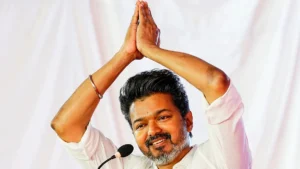
Thalapathy Vijay’s journey from a film star to a political leader represents a significant transformation in Tamil Nadu’s socio-political landscape. His influence extends beyond cinema into social awareness and political engagement.
As he steps into the political arena with Tamilaga Vettri Kazhagam, the coming years will determine whether he can translate his cinematic popularity into effective governance and leadership.
Regardless of outcomes, Vijay’s impact on Tamil culture, cinema, and now politics is undeniable. He stands as a symbol of aspiration for millions and continues to shape public discourse in the state.