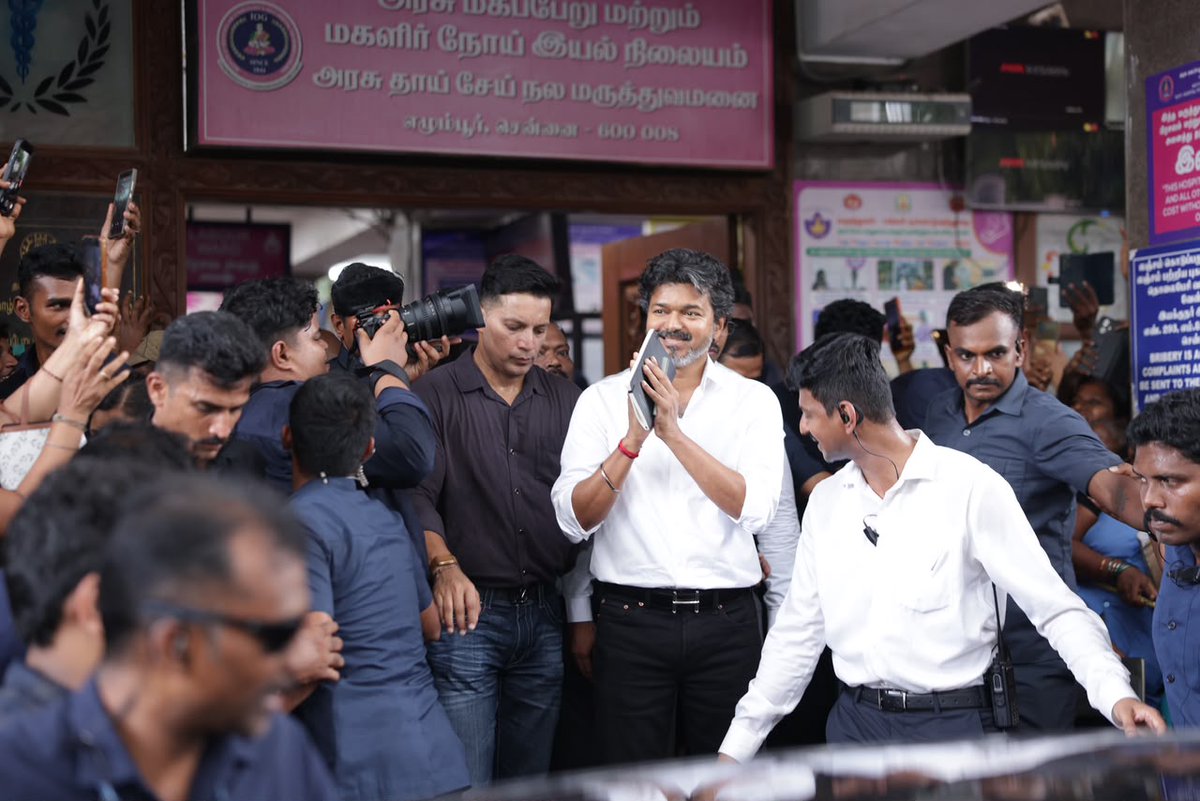






Thalapathy Vijay and Chennai Metro Phase II: A New Chapter in Urban Transportation
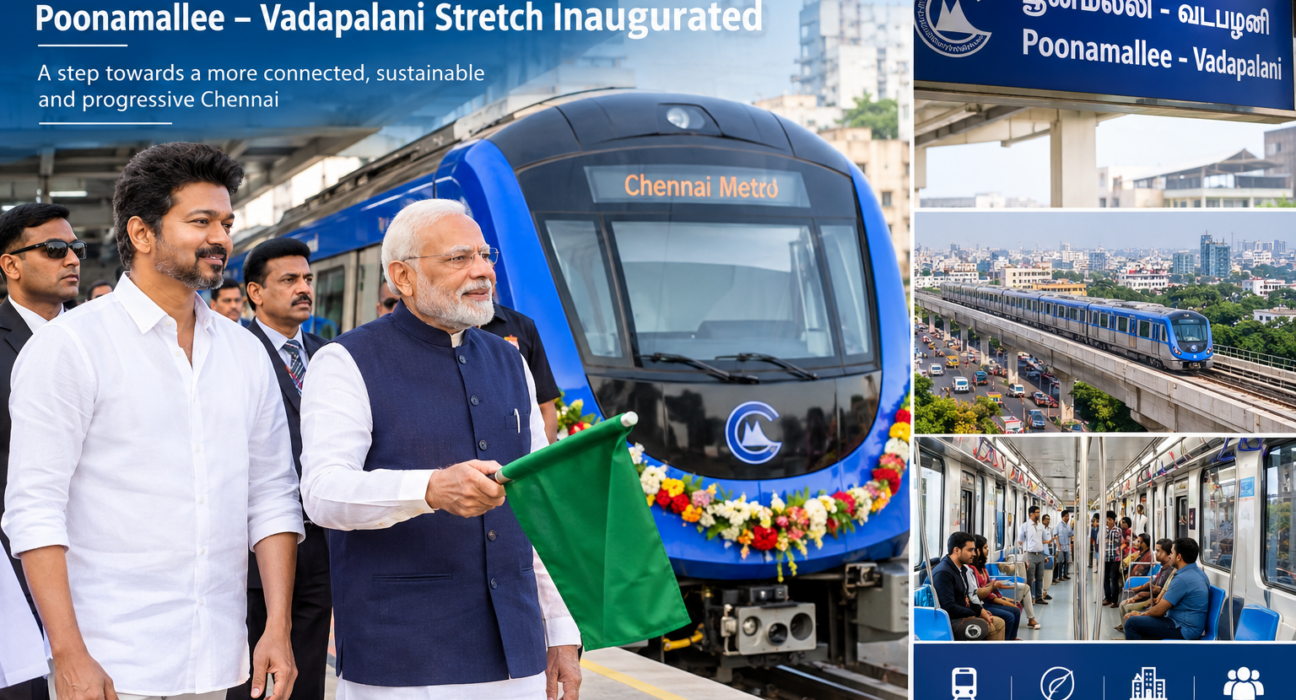
Chennai is entering an important phase in its urban development as the city continues to expand its public transportation infrastructure to meet the growing needs of its population. The inauguration of the Poonamallee–Vadapalani stretch of Chennai Metro Phase II marks a significant milestone in the city’s journey towards faster, more convenient, and more sustainable mobility.
Tamil Nadu Chief Minister C. Joseph Vijay, popularly known as Thalapathy Vijay, joined Prime Minister Narendra Modi for the inauguration of this metro corridor on 11 October 2026. The project represents a major development for western Chennai, connecting important residential and commercial areas through an expanded urban rail network. The approximately 15-kilometre stretch was developed at a reported cost of ₹4,900 crore. Source: The New Indian Express.
The inauguration highlights the importance of infrastructure investment in a rapidly growing metropolitan city. With increasing traffic congestion, expanding residential neighbourhoods, and growing commercial activity, efficient public transport is essential to improving the daily lives of Chennai’s residents.
A Major Milestone for Chennai Metro
Chennai Metro has become an important component of the city’s public transportation system. It provides commuters with an alternative to road travel and helps connect residential districts, commercial centres, educational institutions, and other important destinations.
The Phase II expansion is intended to extend metro connectivity to additional parts of the metropolitan region. The Poonamallee–Vadapalani stretch forms part of Corridor 4 and represents an important step towards making metro services accessible to more residents.
The newly inaugurated section is particularly relevant to western Chennai, where residential development, commercial establishments, and daily commuting requirements have grown considerably. Improved connectivity can make travel more predictable and reduce dependence on private vehicles for suitable journeys.
For thousands of daily commuters, a metro connection offers the possibility of avoiding lengthy traffic queues, reducing the uncertainty associated with road travel, and reaching destinations through a structured public transportation network.
The inauguration therefore represents more than the opening of a railway line. It marks progress towards building a transport system that can accommodate Chennai’s future growth.

Thalapathy Vijay’s Role in the Metro Inauguration
Thalapathy Vijay, who entered public office as Tamil Nadu Chief Minister C. Joseph Vijay, has attracted considerable public attention because of his transition from cinema to politics.
His participation in the metro inauguration placed him at the centre of a major infrastructure milestone for the state. Alongside Prime Minister Narendra Modi, Vijay participated in the inauguration and travelled on the newly opened metro corridor.
The event brought together state and central leadership around a public infrastructure project that involves planning, investment, engineering, and coordination across government agencies.
For residents, the significance of such events ultimately lies in the benefits that infrastructure projects deliver after their inauguration. Reliable services, passenger safety, convenient station access, and effective connectivity determine how successfully a metro expansion serves the public.
The opening of the new stretch provides an opportunity to focus on these practical outcomes and the broader role of public transportation in Chennai’s development.
Connecting Poonamallee and Vadapalani
Poonamallee and Vadapalani are important locations within Chennai’s western urban landscape. Both areas serve residential communities and connect to broader commercial, educational, and employment destinations.
As the city expands, commuting between western suburbs and central parts of Chennai can involve substantial road traffic, particularly during peak hours. A metro connection offers an alternative that may help commuters plan their journeys more efficiently.
The new corridor is expected to improve connectivity for people travelling between these areas and other destinations accessible through the wider metro network. Interchange opportunities, feeder transport, and convenient station access will be important in determining the overall benefits for passengers.
The corridor’s development also reflects the growing need to integrate suburban growth with metropolitan transportation planning. Rather than relying exclusively on road expansion, cities can improve mobility by investing in high-capacity public transport.
For Chennai, this approach can help connect emerging residential areas with established commercial districts and support more balanced urban development.
Infrastructure Development and Engineering
Metro projects are complex infrastructure undertakings that require detailed engineering, extensive planning, and coordination among multiple agencies.
The Poonamallee–Vadapalani stretch includes elevated infrastructure designed to carry metro trains through a busy urban environment. Building elevated rail infrastructure in a densely populated city requires careful consideration of traffic movement, construction access, public safety, utilities, and the surrounding built environment.
The route also includes a double-decker viaduct section, reflecting the engineering challenges involved in developing transportation infrastructure within limited urban space. Such structures require careful design and coordination to accommodate different transport routes within a constrained corridor.
Infrastructure projects of this scale involve engineers, architects, construction specialists, transport planners, safety professionals, and operations teams. Their collective work helps transform long-term infrastructure plans into operational public services.
Once a metro line opens, attention shifts from construction to operational performance. Train frequency, signalling, maintenance, passenger information, emergency preparedness, and station management all contribute to the reliability of the service.
The success of the new corridor will therefore depend not only on its physical construction but also on the quality of its ongoing operation.
Benefits for Daily Commuters
One of the most important objectives of expanding public transportation is to improve everyday travel for residents.
For people who regularly commute between home, educational institutions, workplaces, and commercial areas, a metro service can provide a more structured alternative to road transport.
Potential benefits include:
Reduced dependence on road travel: Commuters can choose metro services for suitable journeys instead of relying entirely on cars, motorcycles, taxis, or buses.
More predictable journeys: Rail services operating according to published schedules can help passengers plan their daily routines more effectively.
Improved access to employment: Better connectivity can make a wider range of workplaces accessible to people living in western Chennai.
Convenient travel for students: Improved public transport can support students travelling to educational institutions and training centres.
Greater mobility for visitors: People travelling within Chennai may benefit from clearer connections between residential areas, commercial centres, and other destinations.
The extent of these benefits will depend on passenger demand, service frequency, fares, feeder connections, and the accessibility of stations.
Supporting Businesses and Commercial Development
Transportation infrastructure can influence the development of businesses, retail destinations, offices, and residential communities.
When public transport becomes more accessible, businesses may find it easier for employees and customers to reach their locations. Improved connectivity can also increase the attractiveness of areas surrounding metro stations for commercial investment and mixed-use development.
For western Chennai, better connections may support the movement of workers between residential neighbourhoods and employment centres. Retail establishments, restaurants, educational institutions, and service businesses may also benefit from increased accessibility.
However, these outcomes are not automatic. They depend on effective urban planning, pedestrian-friendly streets, appropriate parking arrangements, and integration with buses and other transport services.
A metro corridor is most valuable when it becomes part of a wider mobility system that allows people to complete their journeys conveniently from their starting point to their final destination.
Environmental Significance of Public Transportation
Urban transportation has an important relationship with air quality, energy consumption, and environmental sustainability.
Private vehicles contribute to congestion and emissions, particularly when large numbers of vehicles move slowly through busy roads. A well-utilised metro system can help reduce the number of individual vehicle journeys when commuters shift from road transport to public transport.
Electric rail systems can offer environmental advantages, although the overall impact depends on passenger numbers, electricity sources, construction impacts, and the extent to which the service replaces other journeys.
Encouraging public transportation also requires convenient first-mile and last-mile connections. Walking routes, feeder buses, cycling infrastructure, and accessible station entrances can make the metro more attractive to a wider range of passengers.
As Chennai continues to develop, integrating metro expansion with broader environmental and urban mobility policies can help create a more sustainable transportation system.
Challenges and the Importance of Last-Mile Connectivity
While the inauguration of a metro corridor is an important milestone, the passenger experience extends beyond the train journey itself.
Commuters need convenient ways to reach stations from their homes, offices, educational institutions, and commercial destinations. Without effective last-mile connectivity, some residents may continue to depend on private vehicles even when a metro station is relatively close.
Feeder buses, auto-rickshaws, pedestrian pathways, safe road crossings, bicycle facilities, and well-organised pick-up and drop-off areas can help address this challenge.
Accessibility is equally important. Stations should accommodate older passengers, people with disabilities, families with children, and passengers carrying luggage.
Clear signage, reliable passenger information, safe platforms, clean facilities, and responsive customer assistance contribute to a positive travel experience.
Another important consideration is the integration of metro services with Chennai’s existing transport network. Coordinated ticketing, convenient interchanges, and clear information about connecting services can make public transportation easier to use.
The long-term success of Phase II will depend on these operational details as much as on the infrastructure itself.
The Future of Chennai’s Metro Network
The opening of the Poonamallee–Vadapalani stretch represents one stage in the broader expansion of Chennai Metro Phase II.
As additional sections become operational, the network is intended to provide wider connectivity across the metropolitan area. This expansion can help link more residential neighbourhoods with employment centres and other important destinations.
Continued development will require coordination between government authorities, transport agencies, urban planners, contractors, and local communities.
Planning for future demand is also essential. As passenger numbers increase, the metro system must maintain appropriate service frequency, station capacity, safety standards, and maintenance schedules.
Integration with bus services and other forms of public transportation will remain a key factor in making the expanded network useful to the largest possible number of residents.
The broader objective is to create a transportation system that supports economic growth while improving access, convenience, and quality of life.
Conclusion
The inauguration of the Poonamallee–Vadapalani stretch of Chennai Metro Phase II marks an important moment in the development of Tamil Nadu’s urban transportation infrastructure.
The participation of Chief Minister C. Joseph Vijay and Prime Minister Narendra Modi brought attention to a project designed to improve connectivity across western Chennai. Its significance, however, will ultimately be measured by the difference it makes to commuters, businesses, and communities.
From reducing dependence on road travel to supporting commercial accessibility and encouraging the use of public transportation, the new corridor offers opportunities to improve how people move around the city.
Realising these benefits will require reliable operations, effective feeder services, accessible stations, passenger safety, and continued investment in the wider transport network.
As Chennai continues to grow, metro expansion can play an important role in shaping a more connected and efficient metropolitan region. The opening of this corridor is a step towards that future, demonstrating how infrastructure development can support the everyday needs of a changing city.
The long-term promise of Chennai Metro lies not simply in the distance covered by its trains, but in the opportunities it creates for people to travel, work, study, and participate more easily in urban life.