





Balenciaga: The House That Redefined Fashion’s Edge!
Balenciaga is not merely a luxury fashion house; it is a cultural force that has repeatedly disrupted, challenged, and reshaped the global fashion landscape. From its roots in haute couture craftsmanship to its current position at the intersection of luxury, streetwear, and digital culture, Balenciaga has consistently stood apart by refusing to conform. The brand’s journey is one of radical creativity, fearless experimentation, and an enduring commitment to pushing boundaries—sometimes controversially, always influentially.
The Origins: Cristóbal Balenciaga’s Visionary Craft
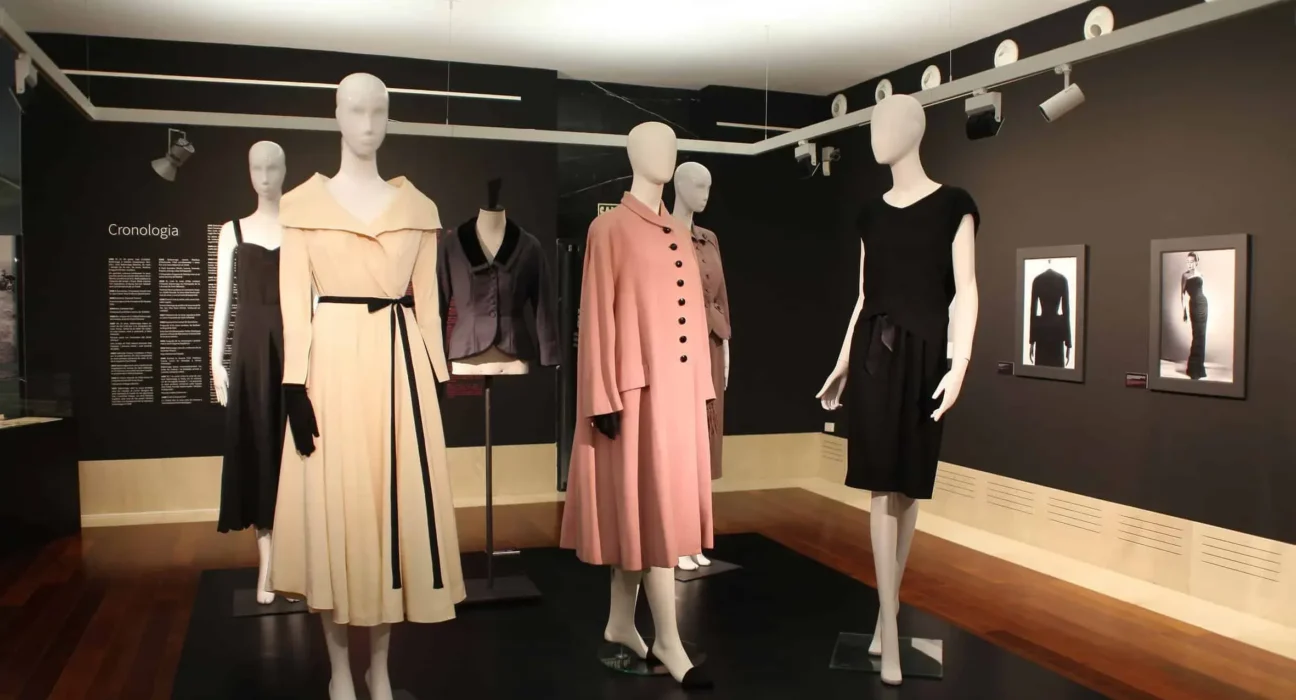
Founded in 1917 by Spanish designer Cristóbal Balenciaga, the house of Balenciaga began as a couture atelier in San Sebastián, Spain, before relocating to Paris in 1937. Cristóbal Balenciaga was revered as a “designer’s designer,” admired by peers such as Christian Dior and Coco Chanel for his unparalleled mastery of structure, silhouette, and technique. Unlike many designers of his era, Balenciaga was deeply involved in the construction of garments, often designing, cutting, and sewing pieces himself.
His designs were revolutionary. He introduced sculptural silhouettes that liberated women from the restrictive corsetry of the time. Iconic shapes such as the barrel dress, baby doll dress, sack dress, and cocoon coat challenged conventional notions of femininity and fit. Balenciaga’s work emphasized architectural precision, volume, and innovation, setting new standards for haute couture. In 1968, at the height of his influence, Cristóbal Balenciaga closed his fashion house, leaving behind a legacy that would inspire generations.

Rebirth and Reinvention
After years of dormancy, Balenciaga was revived in the late 20th century, eventually finding renewed relevance in the 2000s. Designers like Nicolas Ghesquière, who served as creative director from 1997 to 2012, played a pivotal role in modernizing the brand. Ghesquière fused futuristic elements with refined tailoring, bringing Balenciaga back into the spotlight with cult-favorite pieces such as the Motorcycle (City) Bag, which became a defining accessory of the era.
However, it was the appointment of Demna (formerly Demna Gvasalia) in 2015 that truly transformed Balenciaga into a cultural phenomenon. Demna redefined luxury by blurring the lines between high fashion and everyday wear, embracing irony, provocation, and social commentary.
Demna’s Balenciaga: Luxury Meets Street Reality
Under Demna’s leadership, Balenciaga became synonymous with bold experimentation. Oversized silhouettes, exaggerated proportions, logo-centric designs, and unconventional materials became signature elements. Demna challenged traditional ideas of beauty and luxury, elevating items like hoodies, sneakers, and puffer jackets to couture-level status.
Perhaps most notably, Balenciaga revolutionized the luxury sneaker market. Models like the Triple S, Track, and Speed Trainer redefined footwear trends and ignited the global “ugly sneaker” movement. These designs were intentionally bulky, disruptive, and unapologetically anti-traditional—yet they became instant bestsellers.
Demna’s Balenciaga often functions as a mirror to contemporary society. Collections have referenced consumerism, political unrest, digital identity, and the absurdity of modern life. From runway shows staged in flooded arenas to apocalyptic snowstorms, Balenciaga presentations became immersive experiences rather than conventional fashion shows.
Controversy as Conversation
Balenciaga is no stranger to controversy. The brand has frequently sparked debate through provocative campaigns and designs that challenge social norms. While some critics accuse the house of courting shock value, supporters argue that Balenciaga uses controversy as a tool to provoke dialogue and reflection. In an age where attention is currency, Balenciaga has mastered the art of commanding global conversation—forcing audiences to confront uncomfortable questions about culture, consumption, and morality.
Despite facing backlash at times, the brand has demonstrated resilience and adaptability, reinforcing its position as one of the most talked-about names in fashion.
Craftsmanship Behind the Chaos
While Balenciaga is often associated with conceptual boldness, craftsmanship remains at its core. The house continues to uphold haute couture traditions through its Balenciaga Couture collections, reintroduced in 2021 after a 53-year hiatus. These collections pay homage to Cristóbal Balenciaga’s original principles—precision tailoring, luxurious fabrics, and meticulous handwork—while filtering them through a modern lens.
This duality—avant-garde streetwear alongside impeccable couture—sets Balenciaga apart from its peers. It proves that innovation and heritage are not mutually exclusive, but rather complementary forces.
Digital Innovation and the Metaverse
Balenciaga has also emerged as a pioneer in digital fashion. The brand was among the first luxury houses to embrace virtual reality, gaming, and the metaverse. Collaborations with platforms like Fortnite, virtual fashion shows, and digital-only garments positioned Balenciaga at the forefront of fashion’s digital evolution.
Social media plays a crucial role in Balenciaga’s success. Its campaigns are designed to go viral, resonating strongly with Gen Z and millennial audiences who value authenticity, irony, and cultural relevance over traditional luxury codes.
Celebrity Influence and Pop Culture Impact
Balenciaga’s influence extends deeply into pop culture. The brand has been embraced by global celebrities, musicians, and creatives, from Kanye West and Kim Kardashian to Nicole Kidman and global K-pop icons. These associations have amplified Balenciaga’s visibility, making it a staple on red carpets, music videos, and social media feeds worldwide.
Yet, Balenciaga’s appeal goes beyond celebrity endorsement. It resonates with individuals who view fashion as self-expression and rebellion—those who appreciate clothing that makes a statement rather than simply following trends.

The Future of Balenciaga
As fashion continues to evolve, Balenciaga remains at the forefront of change. The brand’s ability to anticipate cultural shifts, challenge conventions, and adapt to new technologies ensures its continued relevance. Whether through couture, streetwear, digital innovation, or cultural commentary, Balenciaga refuses to stand still.
At its essence, Balenciaga represents fashion as a living, breathing dialogue with society. It is a house that questions norms, embraces contradiction, and dares to be uncomfortable. More than a brand, Balenciaga is an attitude—bold, disruptive, and relentlessly forward-thinking.
In a world where trends come and go at lightning speed, Balenciaga’s enduring power lies in its refusal to be predictable. It does not aim to please everyone; instead, it aims to provoke thought, inspire debate, and redefine what fashion can be. And in doing so, Balenciaga continues to shape not just wardrobes, but the very language of modern style.