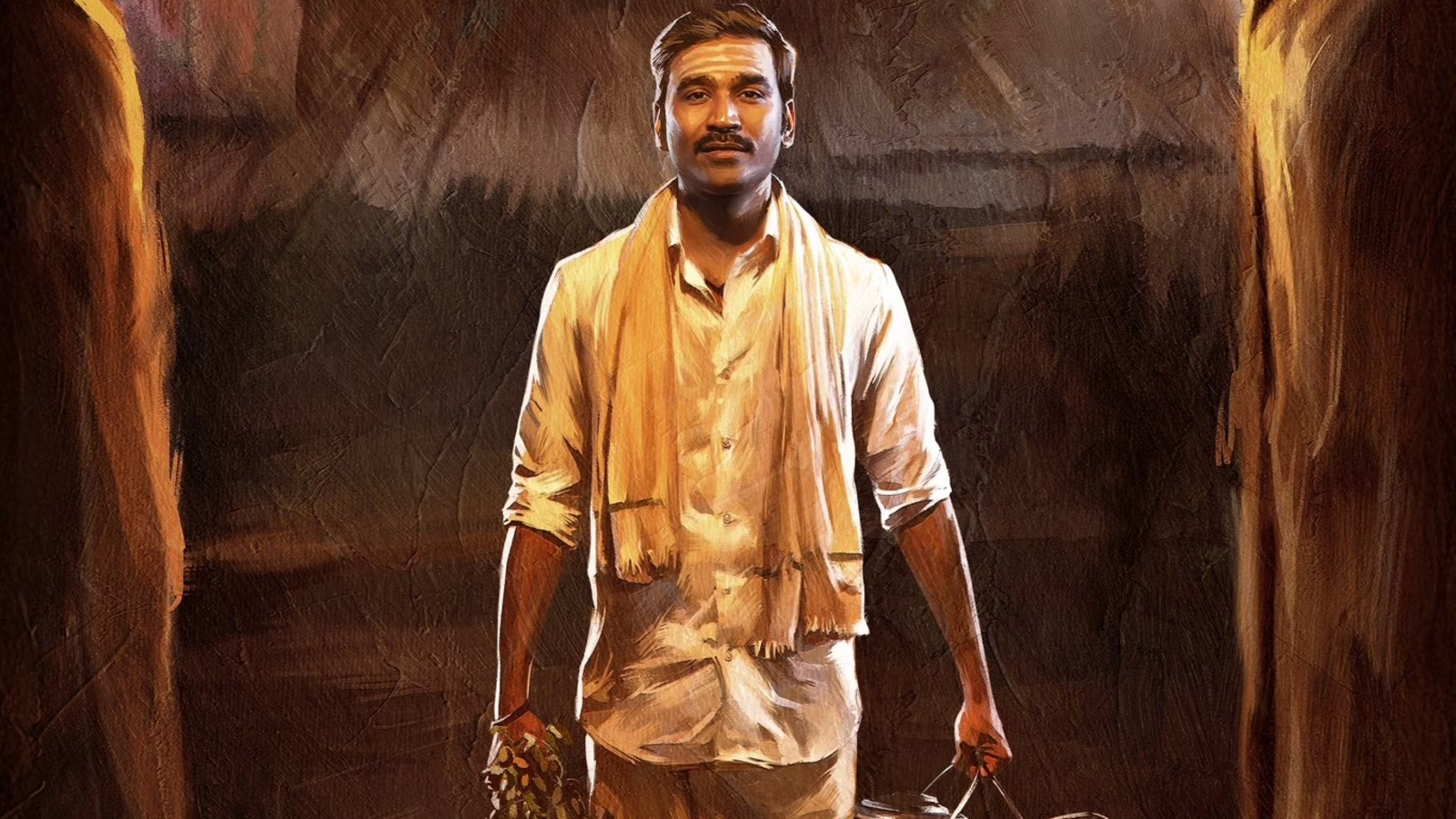







Sivakarthikeyan Approaches Madras High Court Over Alleged Non-Payment of ₹15 Crore Remuneration by Producer Gnanavelraja!

Tamil cinema star Sivakarthikeyan, one of Kollywood’s most bankable actors of the past decade, has approached the Madras High Court alleging non-payment of his agreed remuneration by prominent producer K.E. Gnanavelraja, founder of Studio Green. The dispute, which traces its origins back to the 2019 film Mr. Local, has now resurfaced in a significant legal battle involving claims of unpaid dues, breach of contract, and alleged tax non-compliance.
The case has drawn widespread attention not only because of the stature of the individuals involved but also because it highlights long-standing concerns within the Tamil film industry regarding contract enforcement, financial transparency, and statutory obligations.
Origins of the Agreement: The Making of Mr. Local
According to the petition filed by Sivakarthikeyan, the actor entered into a formal remuneration agreement on July 6, 2018, with Gnanavelraja’s production house for the film Mr. Local. At the time, Sivakarthikeyan was riding a strong commercial wave, having delivered multiple box-office successes and steadily transitioning into the league of top-tier stars.
Under the terms of the agreement, Sivakarthikeyan was to be paid a total remuneration of ₹15 crore for playing the lead role. The contract reportedly specified a structured payment schedule, with installments to be paid during different stages of production and the final installment of ₹1 crore to be settled before the film’s theatrical release.
Mr. Local, directed by M. Rajesh and co-starring Nayanthara, was released on May 17, 2019. Despite mixed critical reception, the film performed well commercially, generating considerable revenue through theatrical runs, satellite rights, and digital distribution. It is this commercial success that forms part of Sivakarthikeyan’s argument that there was no financial justification for withholding his full remuneration.
The Core Allegation: ₹4 Crore Still Unpaid
Sivakarthikeyan has stated before the court that although ₹11 crore was paid by the producer in phases, a substantial sum of ₹4 crore remains unpaid even several years after the film’s release. According to the actor, repeated reminders and informal attempts to recover the pending amount failed to yield results, ultimately compelling him to seek judicial intervention.
The petition characterises the producer’s actions as a clear breach of contract, arguing that the actor fulfilled all his professional obligations, including promotions and cooperation during release, while the producer failed to honour the agreed financial commitments.
The actor’s legal team has further argued that the prolonged delay in payment has caused financial loss, mental distress, and reputational harm, especially since such disputes often attract public scrutiny in the film industry.
Tax Deducted at Source (TDS): A Compounding Issue
Beyond the unpaid remuneration, Sivakarthikeyan’s petition raises a second, more complex issue — alleged non-remittance of Tax Deducted at Source (TDS) by the producer.
Under Indian income tax laws, producers are required to deduct TDS when making professional payments to actors and remit the same to the Income Tax Department. Sivakarthikeyan has claimed that while ₹11 crore was paid to him, the producer failed to deduct and deposit the applicable TDS.
As a result, the Income Tax Department allegedly issued notices to Sivakarthikeyan for the financial years 2019–20 and 2020–21, treating the unpaid TDS as a liability on the actor’s account. The actor claims that this led to approximately ₹91 lakh being recovered directly from his bank accounts, despite the statutory responsibility resting with the producer.
This development has added a serious legal dimension to the case, as it brings statutory compliance failures into what would otherwise be a civil contractual dispute.
Reliefs Sought by Sivakarthikeyan
In his plea before the Madras High Court, Sivakarthikeyan has sought multiple forms of relief, reflecting both the financial and preventive dimensions of the dispute.
1. Direction to Pay Outstanding Dues
The actor has requested the court to direct Gnanavelraja to immediately pay the pending ₹4 crore, along with applicable interest and costs.
2. Injunction on Producer’s Ongoing Projects
One of the most notable prayers in the petition is a request to restrain the producer from investing in or financing other films until the dispute is resolved. The actor has specifically referred to projects such as Rebel, Chiyan 61, and Pathu Thala, arguing that allowing the producer to divert funds could undermine the recovery of his dues.
3. Restriction on Transfer of Film Rights
Sivakarthikeyan has also sought an injunction preventing the producer from transferring or monetising theatrical, satellite, and OTT rights of ongoing and upcoming films until his claims are settled. Such measures are typically sought to secure assets against which a future decree can be enforced.
These prayers underline the seriousness of the dispute and the actor’s determination to secure both payment and accountability.
A History of Disagreements and Partial Settlements
This is not the first time the Mr. Local remuneration issue has surfaced. In 2023, media reports suggested that Sivakarthikeyan and Gnanavelraja had reached a temporary settlement after prolonged negotiations, leading many to believe the matter had been resolved amicably.
However, the filing of the present petition indicates that either the settlement was partial, conditional, or ultimately unsuccessful. Legal observers note that such temporary arrangements are common in the film industry, where parties often attempt to avoid public litigation but later return to court if commitments are not honoured.

Industry Impact: A Wake-Up Call for Kollywood
The dispute has reignited conversations within the Tamil film industry about financial discipline and legal formalisation. Traditionally, many film contracts have relied on trust, personal relationships, and informal assurances — a system that becomes increasingly fragile as budgets and remuneration figures escalate.
With top actors commanding fees exceeding ₹20–30 crore per film, even a single delayed payment can have cascading financial consequences. Sivakarthikeyan’s move to approach the High Court is being seen by many as a strong signal that leading actors are no longer willing to tolerate prolonged payment defaults.
The tax angle, in particular, has alarmed many professionals in the industry. Failure to remit TDS does not just create disputes between producers and artists; it also exposes individuals to regulatory action, penalties, and reputational damage.
Legal Proceedings and What Lies Ahead
The case is currently listed before the Madras High Court, with initial hearings focusing on interim reliefs and the producer’s response. The court is expected to examine:
-
The validity and terms of the original remuneration contract
-
Documentary evidence of payments made and amounts pending
-
Compliance with statutory tax obligations
-
The necessity and proportionality of interim injunctions
Legal experts suggest that the court may first decide on interim measures — such as restraining asset transfers — before proceeding to a full adjudication of the contractual dispute.
Given the high financial stakes and the reputational implications for both parties, there is also speculation that the court’s involvement may prompt renewed settlement talks.
Broader Significance Beyond One Dispute
Sivakarthikeyan’s case goes beyond a single unpaid remuneration claim. It reflects a maturing film industry where legal accountability is increasingly replacing informal norms. If the court rules decisively on issues such as TDS liability and producer accountability, the judgment could serve as an important reference point for future disputes in Indian cinema.
For actors, the case underscores the importance of legal safeguards and documentation. For producers, it sends a clear message about the consequences of financial indiscipline and statutory non-compliance.
Conclusion
The legal battle between Sivakarthikeyan and Gnanavelraja marks a significant moment in Tamil cinema’s evolving professional landscape. What began as a remuneration dispute has expanded into a complex legal case involving contracts, taxation, and industry practices.
As the Madras High Court hears the matter, the outcome will be closely watched — not just by fans of the star or followers of Kollywood gossip, but by producers, artists, and legal professionals across the Indian film industry. Regardless of the final verdict, the case has already sparked an important conversation about transparency, fairness, and accountability in cinema’s business side.