







10 Yoga Positions That Will Help You Gain Flexibility and Improve Your Posture!

In today’s fast-paced world, many people spend long hours sitting at desks, working on computers, or using smartphones. This sedentary lifestyle often leads to poor posture, tight muscles, reduced flexibility, and chronic discomfort in the neck, shoulders, back, and hips. While regular exercise is essential for overall health, yoga offers a unique combination of stretching, strengthening, and mindfulness that can effectively improve flexibility and posture.
Unlike high-intensity workouts that primarily focus on strength or endurance, yoga encourages controlled movements, deep breathing, and body awareness. With consistent practice, yoga helps lengthen tight muscles, strengthen the core and back, align the spine, and restore balance throughout the body. Whether you’re a beginner or an experienced practitioner, incorporating a few key yoga poses into your daily routine can make a remarkable difference in how you move and feel.
This article explores ten highly effective yoga positions that promote flexibility while enhancing posture. Each pose offers unique benefits that contribute to better physical health and overall well-being.
Why Flexibility and Posture Matter
Before diving into the poses, it’s important to understand why flexibility and posture are interconnected.
Benefits of Good Flexibility
- Increases range of motion
- Reduces muscle stiffness
- Prevents injuries
- Improves athletic performance
- Enhances circulation
- Relieves muscle tension
Benefits of Good Posture
- Reduces neck and back pain
- Improves breathing efficiency
- Prevents spinal problems
- Increases confidence
- Reduces fatigue
- Enhances balance and coordination
Yoga addresses both flexibility and posture simultaneously by strengthening weak muscles while stretching tight ones.
1. Mountain Pose (Tadasana)
Although it appears simple, Mountain Pose forms the foundation of almost every standing yoga posture.
How to Perform
- Stand with your feet together or hip-width apart.
- Distribute your weight evenly on both feet.
- Engage your thighs and core muscles.
- Relax your shoulders.
- Keep your spine straight.
- Lift your chest without arching your lower back.
- Breathe deeply for 30–60 seconds.
Benefits
Mountain Pose teaches proper body alignment. It improves posture by helping you become aware of how you stand naturally. The pose strengthens the legs, core, and back while encouraging spinal alignment.
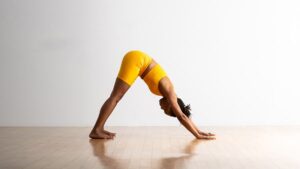
2. Downward-Facing Dog (Adho Mukha Svanasana)
One of yoga’s most recognized poses, Downward Dog stretches nearly every major muscle group.
How to Perform
- Begin on your hands and knees.
- Lift your hips toward the ceiling.
- Straighten your legs as much as comfortable.
- Keep your hands shoulder-width apart.
- Press your heels gently toward the floor.
- Relax your neck.
Benefits
This pose stretches:
- Hamstrings
- Calves
- Spine
- Shoulders
- Arms
It also strengthens the upper body while decompressing the spine, helping correct slouched posture.
3. Cat-Cow Pose (Marjaryasana-Bitilasana)
This flowing sequence improves spinal mobility and flexibility.
How to Perform
Cow Pose
- Inhale.
- Lift your head and tailbone.
- Drop your belly toward the floor.
Cat Pose
- Exhale.
- Round your spine.
- Tuck your chin toward your chest.
Repeat slowly for 8–10 rounds.
Benefits
Cat-Cow helps:
- Improve spinal flexibility
- Reduce back stiffness
- Improve posture
- Warm up the spine
- Relieve neck tension
It’s an excellent pose to begin your yoga practice.
4. Cobra Pose (Bhujangasana)
Cobra Pose strengthens the muscles responsible for maintaining an upright posture.
How to Perform
- Lie on your stomach.
- Place your palms beneath your shoulders.
- Keep your elbows close to your body.
- Inhale as you gently lift your chest.
- Keep your pelvis grounded.
Avoid overextending your lower back.
Benefits
Cobra Pose:
- Opens the chest
- Strengthens the spine
- Improves posture
- Reduces rounded shoulders
- Increases spinal flexibility
This pose is especially beneficial for people who spend hours working on computers.
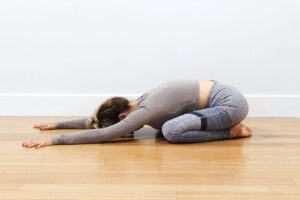
5. Child’s Pose (Balasana)
Child’s Pose is a gentle resting position that stretches the back while promoting relaxation.
How to Perform
- Kneel on the floor.
- Sit back on your heels.
- Stretch your arms forward.
- Rest your forehead on the mat.
- Breathe slowly.
Benefits
Child’s Pose stretches:
- Lower back
- Hips
- Shoulders
- Ankles
It relieves tension accumulated during the day and encourages proper spinal alignment.
6. Triangle Pose (Trikonasana)
Triangle Pose improves balance while lengthening the entire side of the body.
How to Perform
- Stand with your feet wide apart.
- Turn one foot outward.
- Extend both arms.
- Reach toward your front foot.
- Place one hand on your shin or the floor.
- Extend the opposite arm upward.
Benefits
This pose:
- Improves hip flexibility
- Lengthens the spine
- Strengthens the legs
- Opens the chest
- Enhances posture
It also helps improve body awareness and stability.
7. Seated Forward Fold (Paschimottanasana)
This pose provides an intense stretch for the back of the body.
How to Perform
- Sit with your legs extended.
- Inhale to lengthen your spine.
- Exhale as you fold forward.
- Reach toward your feet without forcing.
Benefits
Seated Forward Fold stretches:
- Hamstrings
- Lower back
- Calves
- Spine
Regular practice gradually improves flexibility while relieving lower back tension.
8. Bridge Pose (Setu Bandhasana)
Bridge Pose strengthens the posterior chain while opening the front body.
How to Perform
- Lie on your back.
- Bend your knees.
- Place your feet hip-width apart.
- Lift your hips toward the ceiling.
- Keep your shoulders grounded.
Benefits
Bridge Pose:
- Opens the chest
- Strengthens the glutes
- Improves spinal stability
- Corrects rounded shoulders
- Relieves lower back discomfort
It is especially useful for reversing the effects of prolonged sitting.
9. Low Lunge (Anjaneyasana)
Many people develop tight hip flexors from sitting for extended periods. Low Lunge effectively stretches these muscles.
How to Perform
- Step one foot forward into a lunge.
- Lower the opposite knee.
- Lift your chest.
- Raise your arms overhead if comfortable.
Benefits
Low Lunge stretches:
- Hip flexors
- Quadriceps
- Groin
- Lower back
It improves pelvic alignment and contributes to healthier posture.
10. Standing Forward Fold (Uttanasana)
This calming pose lengthens the spine while releasing muscle tension.
How to Perform
- Stand tall.
- Hinge at your hips.
- Fold forward.
- Relax your neck.
- Keep a slight bend in your knees if necessary.
Benefits
Standing Forward Fold:
- Stretches hamstrings
- Relieves back tension
- Improves flexibility
- Calms the nervous system
- Enhances blood circulation
It is an excellent pose for ending your yoga session.
Tips for Safe Yoga Practice
To gain the greatest benefits from yoga, follow these essential guidelines:
Warm Up First
Spend 5–10 minutes warming up your muscles before deeper stretches.
Focus on Your Breathing
Coordinate every movement with slow, controlled breathing. Deep breathing increases oxygen flow and helps muscles relax.
Never Force a Stretch
Stretch only until you feel mild tension. Pain is a signal to ease off.
Practice Consistently
Aim for at least three to five sessions per week. Consistency matters more than intensity.
Maintain Proper Alignment
Correct posture during each pose prevents injury and maximizes results. If possible, practice with a certified yoga instructor or use a mirror to check your form.
Common Mistakes to Avoid
Many beginners unknowingly reduce the effectiveness of yoga by making simple mistakes.
Avoid:
- Holding your breath
- Rushing through poses
- Ignoring pain
- Comparing yourself to others
- Locking your knees
- Rounding your back excessively
- Practicing without warming up
Yoga is about progress, not perfection.
How Long Does It Take to See Results?
Results vary depending on consistency, age, and current fitness level. However, many people notice improvements within a few weeks.
After 2–4 weeks:
- Reduced muscle stiffness
- Better mobility
- Improved body awareness
After 6–8 weeks:
- Increased flexibility
- Improved posture
- Less neck and back pain
After 3 months or more:
- Significant improvements in spinal alignment
- Better balance and coordination
- Greater strength and endurance
- Enhanced overall well-being
Additional Lifestyle Tips for Better Posture
Yoga works best when combined with healthy daily habits. Consider these simple practices:
- Take regular breaks from sitting.
- Keep your computer screen at eye level.
- Use an ergonomic chair.
- Strengthen your core with complementary exercises.
- Sleep on a supportive mattress.
- Stay hydrated to support muscle function.
- Wear supportive footwear when standing for long periods.
These habits reinforce the benefits gained through yoga.
Conclusion
Improving flexibility and posture doesn’t require expensive equipment or intense workouts. With regular yoga practice, you can strengthen your body, increase mobility, and develop greater awareness of your posture. The ten poses discussed in this article—Mountain Pose, Downward-Facing Dog, Cat-Cow, Cobra, Child’s Pose, Triangle Pose, Seated Forward Fold, Bridge Pose, Low Lunge, and Standing Forward Fold—offer a well-rounded routine suitable for beginners and experienced practitioners alike.
Consistency is the key to success. Even dedicating 15 to 20 minutes a day to these poses can lead to noticeable improvements in flexibility, posture, balance, and overall physical comfort. Over time, yoga not only transforms your body but also promotes mental clarity, relaxation, and resilience. By making yoga a regular part of your lifestyle, you invest in long-term health and well-being, allowing you to move through life with greater ease, confidence, and vitality.